
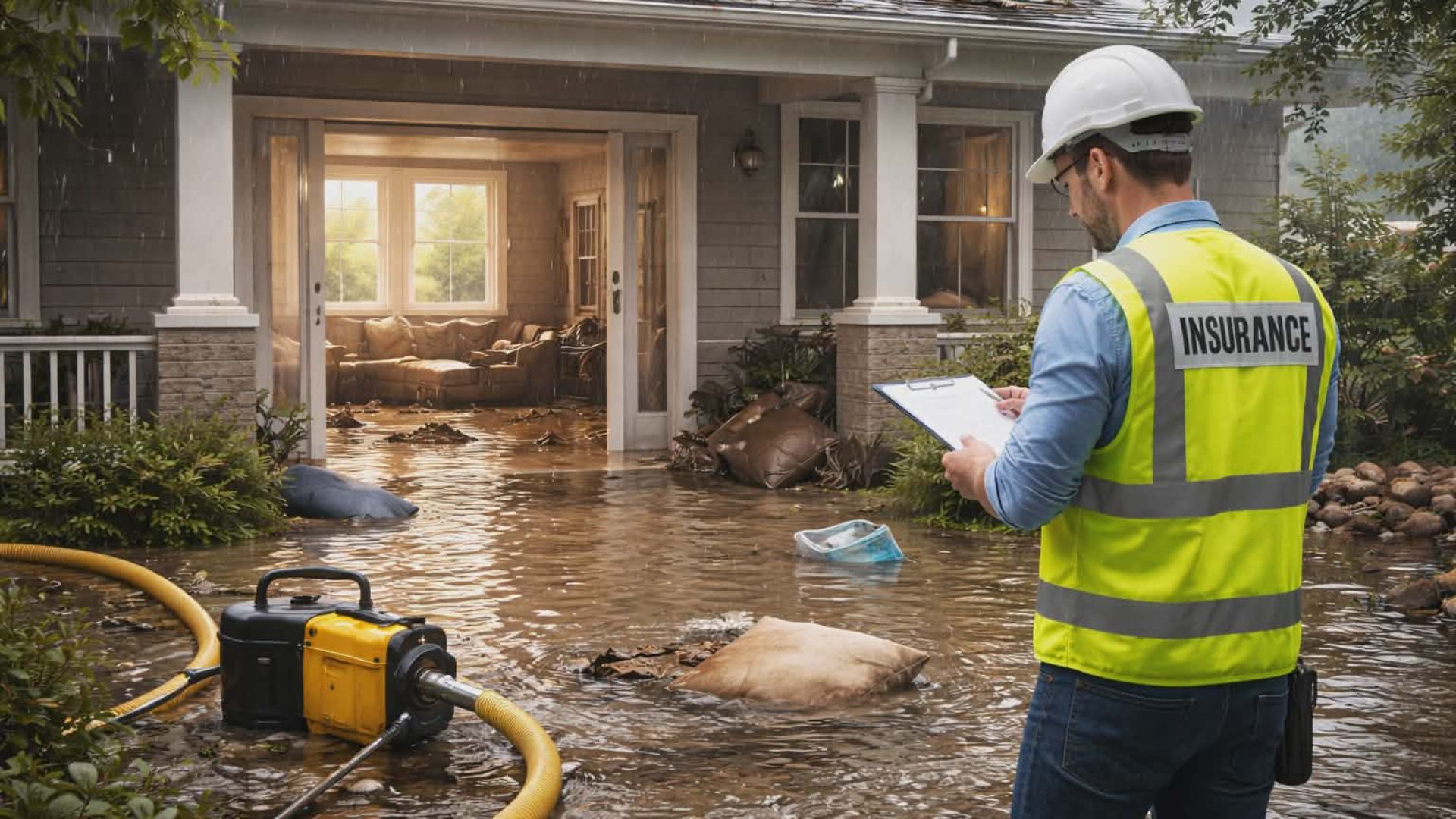
After a heavy storm rolls through Charlotte and water starts creeping into your home, the first question most homeowners ask is simple: does my insurance cover this? The honest answer is that it depends on where the water came from, and that distinction matters more than most people realize.
Understanding what your policy covers and what it does not, can save you thousands of dollars and a lot of frustration when you need to file a claim.
The Key Difference Between Water Damage and Flood Damage
Not all water damage is treated equally by insurance companies. There are specific types of water damage that fall under different parts of your insurance policy, and mixing them up is one of the most common and costly mistakes a homeowner can make.
Water damage typically refers to water that originates inside your home, think a burst pipe, an overflowing bathtub, or a water heater that gives out. This kind of sudden and accidental damage is usually covered by standard homeowners insurance policies.
Flood damage, on the other hand, refers to water that enters your home from the outside – rising rivers, storm surge from a tropical cyclone, flash flood events, or excess water from heavy rain that overwhelms storm drains. Standard homeowners insurance does not cover flood damage. That is where separate flood insurance comes in.
What Does Homeowners Insurance Actually Cover?
Most homeowners insurance policies cover water damage caused by internal sources. If a pipe bursts, a roof leaks, or a sump pump fails and causes water damage inside your home, your policy may step in to help repair or replace what was damaged.
However, homeowners policies typically do not cover:
- Flooding due to flooding from outside your home
- Seepage or groundwater that slowly enters your basement
- Damage from a sewer backup (unless you have a specific rider)
- Overflow from a storm drain or nearby body of water
Homeowners and renters insurance share a similar exclusion here, neither standard homeowners insurance nor renters insurance policies cover flooding by default. If you are a renter, your landlord’s policy also will not protect your personal property from flood water.
Understanding Flood Insurance Coverage
Flood insurance coverage is typically purchased as a standalone policy. The most well-known source is the National Flood Insurance Program (NFIP), managed by FEMA. The NFIP offers flood insurance policies to homeowners, renters, and business owners in participating communities.
NFIP flood insurance covers direct physical flood damage to the structure of your home and its contents. Contents coverage is sold separately from building coverage, so make sure you understand what is included when you purchase flood insurance through the program.
Private flood insurance is another option worth exploring. Private flood insurance providers often offer higher coverage limits and more flexible terms than the NFIP, which can be a better fit depending on your flood risk and property type.
Do You Need Flood Insurance in Charlotte?
If your home sits in a high-risk flood zone or floodplain, your mortgage lender may actually require you to carry flood insurance coverage. But even if you are not in a designated high-risk flood area, buying flood insurance is still worth considering.
A large percentage of flood claims come from properties outside of mapped floodplains. Heavy rainfall events and flash floods do not care about flood zone boundaries. If you are unsure about your property’s flood risk, contact your agent or speak with an insurance agent or company who can help you review your coverage options.
Does Car Insurance Cover Water Damage?
This comes up more often than you might think after a major storm. Car insurance covers water damage only if you carry comprehensive coverage on your auto insurance policy. If your vehicle was submerged or damaged during a flood event, comprehensive coverage protects your vehicle and may help you repair or replace it, or settle it as a total loss. Basic liability coverage will not help here, damage to your vehicle from flooding requires a comprehensive layer.
What to Do After Flood Damage Occurs
When flooding affects your home, acting quickly is critical. Document everything before cleanup begins. Take photos, make a list of damaged items, and contact your insurer as soon as possible to start the insurance claim process. Your policy covers specific types of losses, and the insurance information you find in your declarations page will tell you exactly what applies.
Working with an experienced restoration contractor can also make the process smoother. Oak & Iron Construction Group has helped homeowners across Charlotte navigate disaster recovery and restoration after major storm damage, bringing the same quality and precision they apply to new construction and remodeling. You can explore their recent remodeling and custom home renovation projects or browse their full-service residential construction and remodeling solutions to understand the full scope of what they offer.
Common Questions About Flood and Water Damage Coverage
Does insurance cover water damage from rain coming through the roof?
Damage may be covered if it resulted from a sudden weather-related event, like wind lifting shingles. However, gradual leaks or neglected maintenance are typically excluded.
Is sewer backup covered by homeowners’ insurance?
Damage from a sewer or sump pump failure is not automatically covered. You may need to add a sewer and water backup endorsement to your existing policy.
What if my basement floods?
Standard insurance policies do not cover flooding in a basement from external water. You would need flood insurance through the NFIP or a private flood insurer. Insurance may cover water damage caused by an internal source inside your basement, but always verify that coverage protects what you assume it does.
Can a renter get flood insurance?
Yes. Renters can purchase flood insurance through the NFIP or private flood insurance providers to protect their personal property.
Conclusion
Flooding and water damage are not the same thing in the eyes of an insurance policy, and that distinction matters enormously when disaster strikes. Standard homeowners’ insurance policies do not cover flood damage – you need a separate policy for that. Whether you are reviewing your coverage options or dealing with the aftermath of a storm, getting the right guidance is essential. If your home has suffered storm damage, schedule a consultation with our construction team and let Oak & Iron help you rebuild with confidence.